Growing flowers is the heartbeat of gardening for many. From climbers to trailers, to pots on the patio or indoors below weâve answered an array of your questions to help you get the best out of all your budding bloomers.
A woody stem is a good sign that your clematis is thriving. In fact, itâs quite common for the lower part of the clematis stem to become brown and woody as it matures. Some even start peeling â you might see thin, fibrous strips of bark flaking away. Donât worry â this is absolutely normal.
Some clematis do require pruning to prevent the middle of the plant becoming a mass of tangled bare stems and the flowers growing too high up. You just need to know whether your clematis is type 1, 2 or 3 so you can prune it correctly. If youâre not sure, our article on how to prune a clematis will help.
Sweet peas are fairly straightforward to grow but a few simple tips will help you germinate more seeds, produce stronger seedlings, and enjoy more flowers.
Sweet peas have deep roots and benefit from being grown in deep containers â you might want to start them off in root trainers. Alternatively, just use ordinary 7.5cm (3â) pots. You can sow 3 seeds per 7.5cm pot at a depth of 1cm using a free-draining compost such as John Innes No.2. Place the pots in a propagator, or seal them inside a plastic bag at a temperature of 20-25C. Germination usually takes 10-21 days.
Once germinated, grow your sweet peas on in bright, cooler conditions â unplug your propagator and remove the lid. Once theyâre growing strongly, and are fully rooted into their pots, acclimatise them to outdoor temperatures before transferring them to a cold frame outdoors. Pinch out the growing points of each stem once the second pair of leaves has opened to encourage bushier growth.
Later you can plant your sweet peas outdoors at a distance of 23cm apart in any well drained garden soil, but they prefer a position in full sun. Train the stems onto a suitable support such as trellis or a freestanding climbing frame. Itâs a good idea to use sweet pea support rings to tie your sweet peas to the frame until they become established.
For more information, take a look at our comprehensive article: âHow to grow sweet peasâ.
Allium leaves often start to brown off just as the plant comes into flower. This is caused by environmental conditions and is nothing to worry about.
The best way to grow alliums is to plant them among leafy perennials in herbaceous borders - this will hide the browning foliage while you get to appreciate the lovely flowers and spectacular seedheeds.
For more ideas about how to make the most of these architectural beauties, see our article: How to grow alliums.
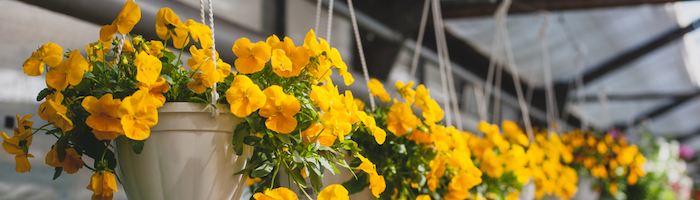
Petunias in hanging baskets
If youâre planting up containers, choose a combination of evergreen plants and winter flowering plants to bulk the container out and create interesting textures and heights. Good winter-flowering plants for containers include heather, snowdrops, hellebores, pansies, violas and primrose varieties such as âWorld's Most Scented Mixâ.
Add some structure with evergreen plants like dwarf conifers, Euonymus, dwarf Hebes and cordylines. Many of these shrubs have colourful foliage in their own right as well as providing a great backdrop for flowers. If you incorporate evergreen heathers, Thyme and Gaultheria procumbens in your containers, they will spread out and trail luxuriously over the side to striking effect.
The trick to successful hanging basket displays is to include trailing plants with your flowers. Small varieties of grasses such as Carex flagellifera and Carex comans will spill over the sides of a basket to provide a trailing effect. Other good trailing plants include ivy and periwinkle (Vinca).
Want to plant one up for winter? Watch our quick hanging basket video tutorial now for more tips.
The best way to ensure a great display next year is to keep your plants in tip top condition. Do this by watering your foxgloves regularly during particularly hot periods. Give them an occasional feed with a balanced fertiliser during the summer and deadhead any faded flowers to promote more flower production. When autumn arrives, cut back any remaining old flower stems to encourage plenty of new side shoots.
Although foxgloves are hardy in mild parts of the UK, if you have them in containers, move the plants to a sheltered position with a minimum temperature of 0°C (32°F) and water sparingly during the winter months. If you live in one of the colder parts of the UK, lift your border-grown plants in autumn and pot them up for over-wintering.
This is quite a common problem with roses, particularly the large-flowered English Rose types. Their big, puffy flower heads are simply too heavy for the stems, particularly in wet weather. The problem tends to improve as the plant matures, but in the meantime, discreetly prop them up by inserting a few twiggy sticks around the bush to hold the growth more upright.
If your roses are generally suffering from weak, spindly growth, it could be due to insufficient sun. Review the position of these roses and move them in the autumn if necessary.
Pruning your roses back in winter (by no more than half) will also encourage stronger growth and thicker stems.
Donât worry about your soil type - roses grow well on clay. Theyâre quite greedy plants however, so an application of slow release fertiliser in spring and autumn will give them a welcome boost.
There are lots of plants that are easy to grow in containers, but none of them are completely maintenance-free as you need to remember to water and feed them all.
To create the best display, choose plants that provide colour at different times of the year. When each container bursts into flower, simply move it into a prominent position on your patio.
The best time to plant perennials and shrubs is spring, but if youâre planting bulbs, wait until autumn.
Bulbs are excellent for creating low maintenance containers that will give you a long period of interest. For a succession of flowers that begin in spring and continue throughout the summer, try planting your bulbs in layers - daffodils at the bottom, tulips in the middle, and finally crocus at the top. Summer flowering bulbs such as alliums also make a striking display. They look great when underplanted with something low-growing, such as Aubrieta.
How about some shrubs for larger containers? Daphne x transatlantica 'Eternal Fragrance' makes a good specimen shrub with evergreen foliage, flowers and fragrance.
Primroses, Dianthus, Armeria and Winter Aconites are other low-maintenance choices that provide lots of colour and interest at different times of the year. For more inspiration, see our article: 'Plants for containers'.
Rust spot is a fungal infection that is a common problem with Antirrhinums. Unfortunately it can mutate and adapt very easily, infecting even the most resistant Antirrhinum varieties.
Remove infected leaves as soon as symptoms appear, to delay the spread. However the most reliable course of action is to use chemical fungicides such as âWestland Plant Rescue Fungus Controlâ and âBayer Garden Systhane Fungus Fighterâ.
Start using these from early summer onwards to help prevent infections in the first place. They normally need to be applied every few weeks, although do check the manufacturerâs instructions. It also helps to use fresh, vigorous new plants each year.
There are lots of plants that thrive in woodland conditions. Bulbous plants such as Snowdrops, Winter Aconite, Bluebells and Lily of the Valley love the shady, moist conditions that tree cover can provide.
Perennials such as Geranium himalayense âBirch Doubleâ, and Phlox divaricata provide attractive ground cover and bring a flush of summer flowers to your woodland garden.
For areas of dappled shade, plant Hellebores, Dicentra (Bleeding Hearts), Meconopsis (Himalayan Poppy) and Alchemilla mollis. One of my favourite woodland plants is Brunnera,, which comes in variegated leaf colours as well as plain green, and produces dainty blue flowers in April and May (much like a Forget-me-not). Alternatively, you could try Tiarella cordifolia (Foam flower) which has frothy flowers in the summer.
For more inspiration, read our article: 'Plants for shade'.
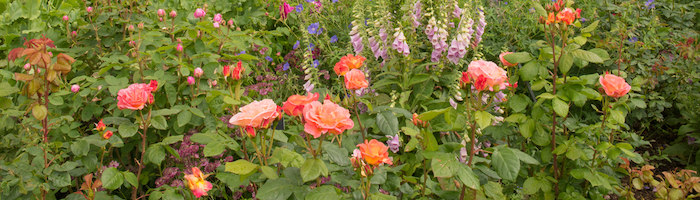
Cottage garden flowers
If you have a south-facing garden youâll need to choose plants and flowers that enjoy full sun. Make sure that you prepare your soil in advance by digging in plenty of compost, well-rotted manure or other organic matter. Following planting, itâs also worth mulching your border with gravel or bark chips after a good rainfall while the soil is still moist. Good preparation will help to retain moisture and keep the roots cool on long, hot summer days.
If your garden is particularly hot and dry, select plants that are specially adapted to these conditions. Those with furry or silver foliage such as Stachys and Helianthemum deflect the sunâs rays to prevent their leaves from scorching.
Many aromatic plants such as rosemary and lavender are also well adapted to hot weather, with tiny leaves to reduce evaporation.
Succulent plants store water in their fleshy leaves â try Sedum âTurkish Delightâ for its stunning burgundy colour.
And finally, rhizomatous plants such as bearded iris also enjoy baking in a hot sunny spot.
Seeds are normally collected in late summer and early autumn, although many bedding plants produce seeds earlier than this (especially in hot summers).
As soon as they start flowering, keep an eye on the plants from which youâd like to collect seeds â they can mature quite rapidly and you need to catch them before they disperse. Watch carefully when your flowers start to fade - theyâre often replaced by green seed pods (as long as the bees have been visiting!). Try and collect your seeds on a dry day as soon as you notice the seed pods start to darken.
Petunia and Busy Lizzie seeds are contained in a rounded, slightly pointy seed pod which will ripen to brown and become crispy before splitting open to disperse the seed. Youâll need to look really carefully inside the pod â petunia seeds are particularly tiny!
Marigold seeds arenât contained in a pod, but are found in a tight cluster at the point where the flower used to be (like a sunflower). Simply tap them onto a piece of greaseproof paper.
If youâre unsure what youâre looking for, save a few seeds before you sow them next year to keep for comparison later in the summer. Also, just be aware that seeds saved from F1 Hybrids probably wonât look like the parent plant. This is all part of the fun though!
Most wildflowers are easy to grow from seed, but itâs worth thinking about the location youâre sowing them in (sunny, shaded, damp, dry) and whether you want instant colour this year (annuals) or can wait a year for flowers (biennials and perennials). All wildflowers are of great benefit to native insects and some, such as Teasel (Dipsacus sylvestris), provide seed for birds too.
Annuals are great for instant colour â try growing field poppies, cornflowers, corn cockles, corn marigolds and oxeye daisies (oxeye daisies are perennial but will flower in their first year). Wildflower seed mixtures contain many of these, plus a variety of other annual flowers. All of these wildflowers prefer a position in full sun on well-drained soil. You can simply sprinkle the seed directly on the soil where youâd like them to grow.
If youâre prepared to wait a year, some of the prettiest wildflowers are biennial (flowers in the second year) or perennial. Honesty (Lunaria annua) is a tall biennial that produces masses of purple flowers in late spring and summer that are gradually replaced by fantastic seed heads, like papery coins, through the autumn. They also grow well in part shade, making them ideal for an awkward spot in the garden.
Foxgloves (Digitalis purpurea) are another good choice for part shade, although theyâre poisonous so take care if you have pets or children. You could also try red campion for part shade, or small scabious and musk mallow for full sun.
If you have a damp spot in the garden, ragged robin (Lychnis flos-cuculi) is worth growing for its pretty pink flowers. And for the front of a border or a rockery, perennial primroses make an attractive spring display.
To collect seeds from sunflowers, leave the heads of the flowers on the plant for as long as possible â until they turn brown and the seeds have less moisture in them.
On a dry day, cut the heads of the flowers off along with about 30cm of the stem and hang them upside down somewhere dry, like a garage or shed.
Wrap a paper bag around the heads, or hang them over a tray to catch any seeds that fall. Make sure thereâs good air circulation to prevent the seeds getting mouldy.
Donât worry if your seedlings come up close together â it wonât kill them. Wait until theyâve developed their second set of leaves and then transplant them into their own little pots.
Next time, try to sow the seed a little more thinly and evenly across the surface of the compost as this will certainly make it easier to separate your seedlings when you come to prick them out.
Hereâs some more information on how to âprick outâ and harden off your seedlings as they continue to grow.
You can start your sweet peas off inside, in pots, if you have space in your greenhouse and you prefer to grow them this way. There isnât much difference between autumn and spring sown sweet peas. Those sown in autumn will need to be cared for over the winter, but they will flower earlier. If you wait until Spring to direct sow your sweet peas, they will soon catch up with earlier sowings.
Your autumn sown sweet peas will need to be hardened off before theyâre planted out. As long as the chance of frost has passed, you can usually start to harden them off in April. Just keep an eye out for slugs and snails who love the young growth at this time of the year. And donât forget to pinch the stems back once or twice to encourage bushier growth and more flowers.
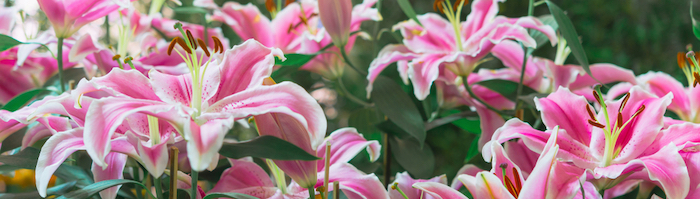
Oriental lilies
Growing oriental lilies from seed requires some patience! Wait until the seed heads have turned brown before collecting the seeds. Itâs best to sow them straight away into damp compost and cover with a further sprinkling of compost. If you cover the containers with cling film it will help retain moisture.
Keep the seed trays warm â ideally between 15-21C. Maintain this temperature for 3 or 4 months and then move them to your fridge for at least 3 months. If any have sprouted after 3 or 4 months, move them into a bright place to grow on â the rest should stay in the fridge. By time they are finished in the fridge, it will be late spring/early summer and the perfect time to place them outside in a cold frame or in the ground.
Growth will be small the first year and it may take a few years before plants produce a flower. Due to hybridisation and complex genetics you may find some of the seed is not viable, so donât be put off if you have poor germination.
You can certainly take cuttings from a special rose. Itâs a fairly straightforward process and doesn't require too much technical ability. Hereâs what to do:
With luck, your cuttings will take root over the winter months and by next summer they should be ready for potting up into individual pots and growing on.
Lupins have a deep tap root which means that they are rather difficult to divide â but itâs sometimes possible, depending on the size of the clump in question. If you can be sure that each portion will have its own roots, it might be worth a go.
Lupins should be divided in early spring (March) or autumn (October) for the best results.
Daphne cuttings are best taken as âsemi-ripeâ cuttings in mid-to-late summer.
Prepare some small 9cm pots before you begin. Fill them loosely with a mixture of 50% compost and 50% perlite for good drainage. You can gently firm the compost once with your finger tips, but donât compact it too much.
Semi-ripe cuttings should be taken from the current seasonâs growth and should have a fairly hard base and a soft top. Itâs best to take a heel cutting, where you simply select a healthy young shoot and pull it away from the main stem, leaving a âheelâ (a piece of the main stem) attached.
Remove the leaves on the lower third of the shoot and cut any remaining big leaves in half to reduce water loss. Dip the heel of the cutting into hormone rooting powder. This encourages rooting and protects from rot.
Insert the cuttings around the edge of the pots, spacing them so the leaves arenât touching. Water well and allow the pots to drain before placing inside a clear plastic bag. Keep the pots somewhere warm and bright, but out of direct sunlight if possible. Make sure the compost remains moist.
After 6-8 weeks you should start to see roots appearing out of the drainage holes, at which point your Daphne cuttings can be potted on.
The best time to divide Polyanthus is immediately after they have finished flowering, or a little later, in the autumn.
Once youâve made the divisions, place them in pots or a nursery bed in preparation for planting out in the autumn. Make sure you keep the compost moist, particularly during hot weather.
Most people find it easier to divide Polyanthus in the autumn when the hot weather has passed. You wonât need to be so vigilant about watering, yet temperatures are still warm enough for the divisions to establish roots. Polyanthus is a lovely plant for dividing as they root very well!
Take clematis cuttings in late spring, before the new stems become too woody and hard.
Use clean tools and equipment to reduce the chance of disease. Make sure you choose non-flowering shoots to take cuttings from, and prune them off just above a bud. You can prune off a long shoot which can be cut into several pieces later on â the cuttings will eventually need to be trimmed to 6-15cm long. Itâs a good idea to place your cuttings in a plastic bag until youâre ready to use them as this will help them to retain moisture.
Start by preparing a pot or tray. Fill it with a mixture of 50% compost and 50% perlite (available in all good garden centres) for good drainage. When you trim your cuttings to size, make a cut directly above a pair of leaves and another cut below, about mid-way between two leaf joints. Remember to aim for a final length of about 6-15cm.
Dip the bottom of your cutting in rooting hormone powder and tap to shake off the excess. If your clematis leaves are large, cut the leaves in half to reduce the amount of water loss.
Insert your cuttings into the compost so the leaf joint is resting just above the soil. Cover them with a clear plastic bag or place in a propagator in a warm, bright place (but out of direct sunlight).
Rooting normally takes place after 6-8 weeks but can take longer! Once you start to see lots of white roots appearing through the drainage holes itâs safe to gently tip out the cuttings and pot them on. Donât worry if a few cuttings donât make it - this is quite normal. Just remove any that have browned completely.
Oriental Poppies can be lifted and moved in Spring. March is normally a good month to move perennials as the soil tends to be workable and the weather has started to warm up a bit.
Simply lift your poppies with a garden fork, taking care not to damage the roots. Shake off any excess soil before replanting them in their new positions. Make sure that you replant them immediately to prevent the roots drying out, and give them a good long drink afterwards to help settle them in.
I would suggest that you leave a few behind in their current position though, as they're clearly thriving there!
Heucheras naturally push upwards to reveal a woody stem above ground. You can mulch them annually to cover this, but eventually they will need replanting.
Late summer and early autumn is an ideal time to do this, giving the plants plenty of time to âroot inâ before they start producing new growth in spring.
Heucheras tend to be quite short lived perennials so they benefit from being lifted and divided from time to time to help rejuvenate them.
You can certainly take your peonies with you - ideally wait until autumn and lift them when their foliage dies back. Just follow the planting tips on our How to plant peonies video when you replant them.
If you need to move your peonies before the autumn, try to lift the largest root ball possible around each plant to minimise the disruption to their roots. If youâre not sure where to re-plant them straight away, you can always pop them into a container as a temporary home until you get organised in your new garden.
Moving your peonies may mean that youâll forfeit any flowers for the next few years while the plants settle into their new homes. But as peonies can live for up to 20 years, you should have plenty of time to enjoy them once they re-establish themselves.
Although the flowers make them easier to spot, primroses are best moved after theyâve finished flowering, preferably between autumn and early spring.
You can move them sooner, if necessary, although it puts a huge strain on the plant to re-establish its roots and find water and nutrients whilst at the peak of its growth. To help your primroses along, make sure you take as much of the root ball as you can when lifting them. Also work plenty of well-rotted manure or compost into the soil before replanting and keep the soil moist, especially during dry spells.
There are quite a few reasons why roses donât flower. Often itâs something to do with their growing environment, so itâs worth having a quick review:
How much sun is your rose getting? Has the surrounding vegetation started to shade it over the last couple of years? Many roses prefer at least 6 hours of sunshine a day to flower well, so you might need to move it to a sunnier spot this winter.
When was the last time you fed it? Roses are greedy plants and enjoy a rich soil. If you havenât fed it recently, start giving your rose a balanced fertiliser every few weeks and continue for the rest of the summer. Next spring, spread a good layer of well-rotted manure or garden compost around the base of the plant too. If you have been feeding your rose, check the nitrogen content on the feed youâre using. Too much nitrogen can cause lots of foliage growth at the expense of flowers.
Did the flower bud swell but fail to open properly? This could be âcappingâ or âballingâ which is caused by heavy rain or hail. A period of cold or drought during bud development can also prevent proper buds from forming or opening. Obviously there is little you can do about the weather but you can make sure that itâs well watered during dry periods.
Azara microphylla has very small flowers which are borne on the underside of the shoots between the leaf axils in late winter and early spring.
Flowers are borne on shoots produced the previous year, which are susceptible to damage by late spring frosts. If the new shoots were knocked back when growth resumed in the spring, this could have disrupted flowering the following year.
Alternatively, it could simply be that your plant is too young to flower. Growing Azara in a pot shouldnât prevent flowering, provided it is well fed and watered throughout spring and summer. Hopefully you should start to see some flowers soon.
Gazanias can be a bit hit-and-miss with our winters, which is why theyâre grown as annuals. If the winter is mild, gazanias can sometimes survive, but if we get long cold spells of temperatures below-freezing point, then they almost certainly die.
If you want to keep your gazanias, youâll need to lift and replant them in pots for over-wintering. Take as much of the root ball as you can, and gently firm the plant into a pot of multipurpose compost. Water your plants and place them in a bright, cool (but frost-free) greenhouse or conservatory. During winter keep the compost on the dry side to discourage rotting. You can plant them out again next May, after all risk of frost has passed.
The same advice applies to your Geranium Skyrocket â transplant it to a pot and move it to a bright, frost-free place. Itâs also a good time to prune back the stems by up to two-thirds. The secret to overwintering geraniums is to keep the compost almost dry during winter.
In milder parts of the UK, gladioli can be left in the ground over winter, but they do require good drainage. If you have light, free-draining soil you can simply add a dry mulch of bark chips or leaves to protect the corms from the worst of the winter weather.
If you live in a colder part of the country, or your soil is heavy, itâs safer to lift your gladioli corms for the winter. Wait until the foliage dies down, then lift the corms and brush off any excess soil. Dry them on a tray in a well-ventilated area for 2 weeks before storing them somewhere cool, but frost-free, for the winter. You can replant them from April onwards.
Pelargoniums can be successfully over-wintered provided theyâre kept frost-free. If theyâre planted in the ground youâll need to gently dig them up, taking as much of the root ball as possible, and replant them into pots of multipurpose compost.
Check the underside of the leaves for pests and treat any infestation as soon as possible â it will quickly spread once you move them under cover. Water the plants and place them in a bright, cool (but frost-free) greenhouse or conservatory. A cool windowsill is also fine.
The secret to overwintering Pelargoniums is to keep the compost almost dry through the winter months, as theyâre very susceptible to rotting in cool conditions. You can plant them out again next May, after all risk of frost has passed.
By geranium tubers, I assume youâre referring to bareroots which were bought without foliage, and planted below soil level. If so, then these should be hardy perennials and are fine left outdoors in the ground over winter. The foliage will die back this autumn but it will regrow next year.
However, if you received your geraniums as plug plants, then theyâre probably half-hardy and will need protection over the winter. If theyâre planted in the ground youâll need to gently dig them up, taking as much of the root balls as you can, and replant them into pots of multipurpose compost. Water the plants and place them in a bright, cool (but frost-free) greenhouse or conservatory. During winter keep the compost on the dry side to discourage rotting. You can plant them out again next May, after all risk of frost has passed.
Your begonias will definitely need protection, but as with the geraniums, it helps to know what type you are growing. Some begonias produce tubers below ground while others donât.
If you received your begonias as tubers then youâll definitely know that theyâre tuberous types. In this case, simply reduce watering as the foliage starts to die back and gradually allow the compost to dry out. Alternatively, lift the plant from the soil, clean the tubers and lay them somewhere dry and frost-free to allow the foliage to die completely. The dead foliage can then be removed and the tubers stored in containers of dry sand or peat (or even in paper bags) somewhere cool and frost-free. Keep them at a temperature of 5-10C.
If your Begonia is not a tuberous variety then simply bring it indoors to a bright, cool and frost-free position (a slightly heated greenhouse or bright windowsill is ideal). Water sparingly as Begonias are susceptible to stem and rhizome rot. You can plant it back outside in late spring after the risk of frost has passed.
Your begonia will definitely need protection, but it helps to know what type youâre growing. Some begonias produce tubers below ground while others donât. If you received your begonia as a tuber then youâll know itâs the tuberous type.
If it is tuberous, reduce watering as the foliage starts to die back and gradually allow the compost to dry out. Alternatively, lift the plant from its basket, clean the tuber and lay it somewhere dry and frost-free to allow the foliage to die completely. The dead foliage can then be removed before the tuber is stored in a container of dry sand or peat (or even in a paper bag) somewhere cool and frost-free. Keep it at a temperature of 5-10C.
If your Begonia is not a tuberous variety, simply bring the hanging basket indoors to a bright, cool and frost-free position (a slightly heated greenhouse or conservatory is ideal). Water sparingly as Begonias are susceptible to stem and rhizome rot. You can move it back outside in spring after the risk of frost has passed.
Your plant is actually a zantedeschia, but theyâre often called arums and sometimes mixed up with callas. There are a few frost hardy varieties, mainly varieties of Zantedeschia aethiopica, but most are tender and require a minimum winter temperature of 10C/ 50F.
You can certainly keep your zantedeschia outside during the summer â just choose a sunny spot in your garden. Keep it well watered and feed it every 2 weeks until the flowers fade. Just remember to bring it indoors to a warm position before the first frosts, and keep the soil just moist through the winter.
What a lovely choice of clematis - but both are vigorous growers!
Clematis âArmandiiâ and Clematis âMontanaâ are Group 1 varieties that flower in early spring on the previous year's growth. Itâs best to wait until the summer to prune them once the flowers have faded. Simply remove any damaged or dead stems entirely before cutting back the remaining stems to a pair of healthy buds. This should help to reduce their size and maintain the plants within their allotted space. For more information, take a look at How to prune a clematis which contains a short video tutorial.
Bush roses fall under three main types â hybrid tea, floribunda and shrub roses.
Hybrid tea roses produce large flowers, either singly or in threes at the tips of stems. Floribunda roses generally produce clusters of small flowers at the tips of stems - each flower within the cluster opens at different times. Shrub roses generally have large growing habits and very thorny stems.
The good news is that all three types can be cut back quite hard if required.
Hybrid teas and floribundas flower on new wood so can be cut back hard each winter. Cut to within 15cm (6â) of the base for hybrid teas, and within 30cm (12â) of the base for floribundas.
Shrub roses flower on wood which is 2 or more years old, so are usually only lightly pruned to maintain a good shape. You can cut them back hard if necessary, but you may lose flowers for a few years. The best method to get overgrown shrub roses back under control is to gradually prune out the oldest stems to ground level, removing up to a third each year. This will encourage vigorous new growth and rejuvenation, without losing all the flowers.
All roses are best pruned in February or March, provided weâre not experiencing severe weather. Pruning cuts should always be made just above a bud, at an angle away from the bud.
Hardy fuchsias such as 'Deltaâs Sarah' can be cut right back to a low permanent framework (about 20cm above soil level) in the spring as they flower on current yearâs growth.
Wait until the weather starts to warm up and the buds begin to swell before pruning, making your cuts just above a pair of buds. As your fuchsia is growing in a pot, make sure you sprinkle some slow-release fertiliser such as our Fuchsia feed on the compost surface to help the plant with new growth this season.
Itâs a good idea to give your heucheras a quick tidy up in autumn to remove any old, damaged or diseased foliage. Heucheras are semi-evergreen if theyâre planted in a sheltered location, so itâs worth leaving any leaves that look nice and healthy to give you a little colour over winter. These leaves can then be removed in the spring to make way for a nice new flush of colourful foliage.
Pruning passion flowers is best undertaken in the spring. Start by pruning out any dead or damaged shoots, then reduce the remaining stems to fit the growth to the available space. Tie your new framework of stems to their supports using soft ties.
After your plant has finished flowering, cut back any flowered shoots to two buds away from the previous yearâs framework of stems. Try not to prune any harder than this â hard pruning may result in no flowers appearing the following year.
What a shame that you lost your flowers this year! You can certainly prune out any damaged stem tips and they will reshoot quite quickly if done around June. This winter it might be worth throwing a couple of layers of fleece over the plant on particularly cold nights to give it a little more protection.
It sounds like the freezing temperatures have slowed or completely stopped your Fuchsiaâs growth.
If you have a hardy variety, your Fuchsia will become dormant now until the weather warms up again. It will be fine over the winter as long as itâs in the ground.
Half-hardy and tender Fuchsia varieties will not survive the winter and are best treated as annuals.
If your Fuchsia is a hardy variety, apply a deep layer of bark mulch to the base of the plant to give the roots some extra protection throughout the winter. Make sure that you donât mound it up around the stem. If itâs in a container, it might be best to move it into a greenhouse or against the shelter of a warm wall. Wrap some bubble wrap around the pot to protect the roots from the cold.
Unfortunately thereâs always a risk of losing Hydrangea buds to a late frost. I tend to leave the previous yearâs faded flower heads intact over the winter until the plant starts into active growth the following spring. It looks a little messy but the old flower heads help to provide a little protection against the stem tips being frosted.
Wait until the unseasonable cold spell has passed and then snip off the damaged stem tips. Itâs early enough that your plant should still produce a few flowers, but it probably wonât be quite as good as previous years' displays.
The reason that begonias are generally started off in the greenhouse is that they require good filtered light, and this is best achieved in a greenhouse with the use of some shading to prevent scorching as the weather warms up.
However, if you have a conservatory or a bright windowsill in a cool room then you can just as easily start them off in your home.
If youâre growing them in your house itâs advisable to delay planting your tubers until mid-March or even April. The light levels will be better by then so there will be less risk of brittle, leggy growth developing. By the time theyâre ready to plant into baskets, you should be able to move them to a protected spot outside. Just keep an eye on the weather for any late frosts, as youâll need to bring them back indoors to protect them.
In theory youâre supposed to be able to leave plants in cardboard (or coir fibre or peat) pots and roots should grow through. However this isnât always successful and the cardboard can become a barrier to the roots, resulting in slow growth.
You can either completely remove the plants from the cardboard and re-pot them, or remove the bottom of the cardboard pot to allow for root growth. Tearing away the top of the pot will also help, or planting deeply enough that the top is completely below soil level. Wetting the pot makes tearing easier.
Sweet peas are normally sown in deep pots (as they are deep rooting) and then planted straight out into the garden once ready. If you need to pot up into bigger containers, choose a pot which is about 5cm (2 inches) larger in diameter than the original pots.
To stop your sweet peas falling over or becoming tangled, itâs good practice to pinch them out just above a set of leaves to promote bushier growth. This will also delay growth if the weather is unfavourable for planting.
Sweet peas are hardy annuals so can be planted out from mid- to late-spring once the weather has reliably started to warm up. If theyâve been raised indoors in a warm environment youâll need to harden them off. Simply put them outside every day for a week and bring them in at night.
If weâre still having regular frosts then wait until milder weather before planting out. You can find out more about growing sweet peas with our 'How to grow sweet peasâ guide.
If you can provide protection in a greenhouse or conservatory then April is an excellent time to plant up flower pouches and hanging baskets. It will bring the plants on earlier and ensure you have beautiful, full and flowering plants ready for hanging outside in early summer.
After youâve planted your flower pouch, lay it flat until youâre ready to hang it up outside - this will ensure the plants grow evenly. As youâve rightly said, only hang your flower pouch up once the risk of frost has passed (normally the beginning of June to be safe).
Itâs a bit late to be dividing geraniums in warmer months as they wonât establish well in hot and dry conditions. If you can provide constantly moist soil in a lightly shaded position you could try dividing them now, but it would be much better to wait until the autumn when the temperature drops and thereâs more moisture.
After your geraniums have finished flowering you can keep them tidy by cutting the foliage back almost to ground level. This encourages fresh foliage and often a second flush of flowers later in the summer.
Banner image: Philip Bird / Shutterstock
Hanging baskets image: Katjabukorova / Shutterstock
Cottage garden flowers image: Pete Turner / Shutterstock
Oriental lily image: GrooveZ / Shutterstock
Get exclusive discounts, new product notifications and hints, tips and more!
Our full range of products are now available right at your fingertips. Browse everything from flowers and house plants through to fruit and vegetables at ease on your mobile device.
To download our app simply scan the QR code below: