100% Customer Satisfaction Guarantee

Refer A Friend And Get 20% Off*

Our Customers Rate Our Excellent Service

Track your order through my orders

Complete guide to garden pond plants

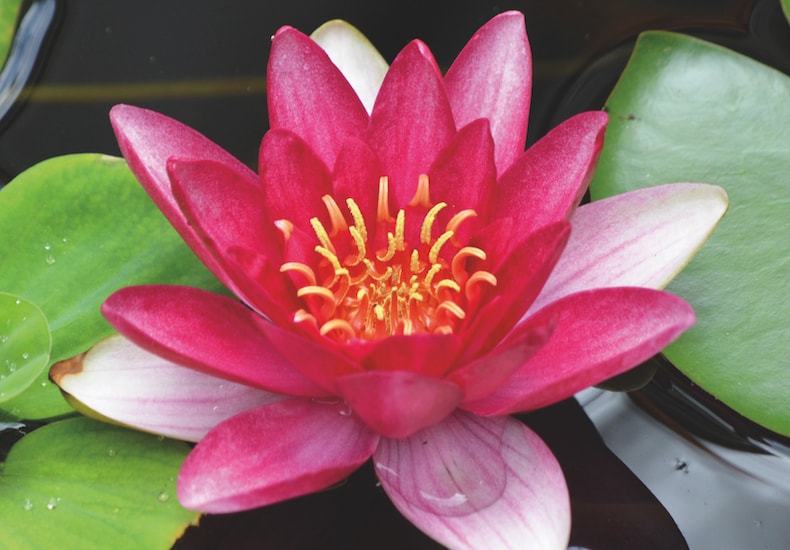
Red water lily

Water lillies are a beautiful addition to any pond
Image: Water Lily Red with Pond Basket from Thompson & Morgan

With so many aquatic plants to choose from, planting up a garden pond can be a daunting task. But getting it right will create one of the most breathtaking, diverse and fascinating habitats in your garden. Here's everything you need to know about pond plants including the different planting zones, specific variety tips and ongoing care advice.

Browse our full range of pond plants for more inspiration.

Why are pond plants so important?

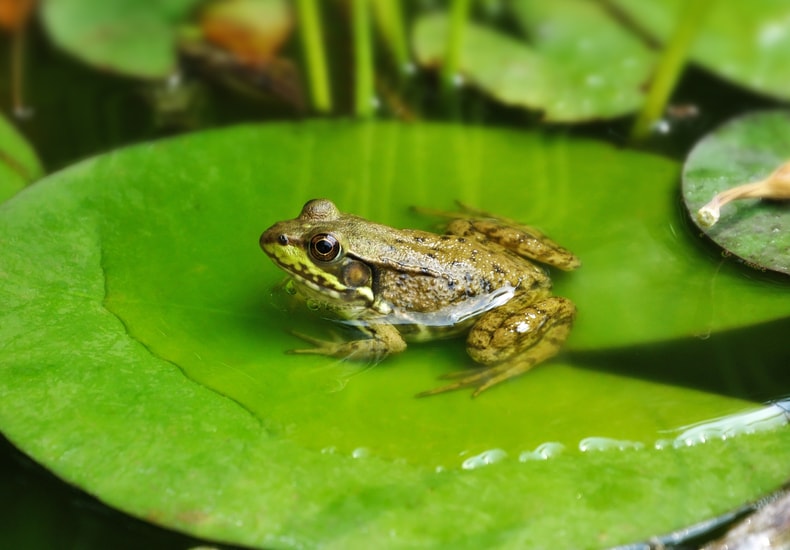
Frog on a lily pad

Aquatic plants provide shade and habitat for wildlife
Image: Shutterstock

Aquatic plants are vital for providing shade and using up nutrients in the water which would otherwise lead to a build up of green algae. They keep the water clean and well oxygenated, providing shelter for fish and other wildlife. If you're trying to encourage wildlife to your garden, you may prefer to stick with native pond plants.

Pond plants are a diverse group with an infinite range of form and habit. The perfect way to soften the hard edges of your pond, they also add interesting texture and create intriguing reflections on the water. Why not add a few evergreen plants to keep your pond interesting all year round?

How to choose the right pond plants

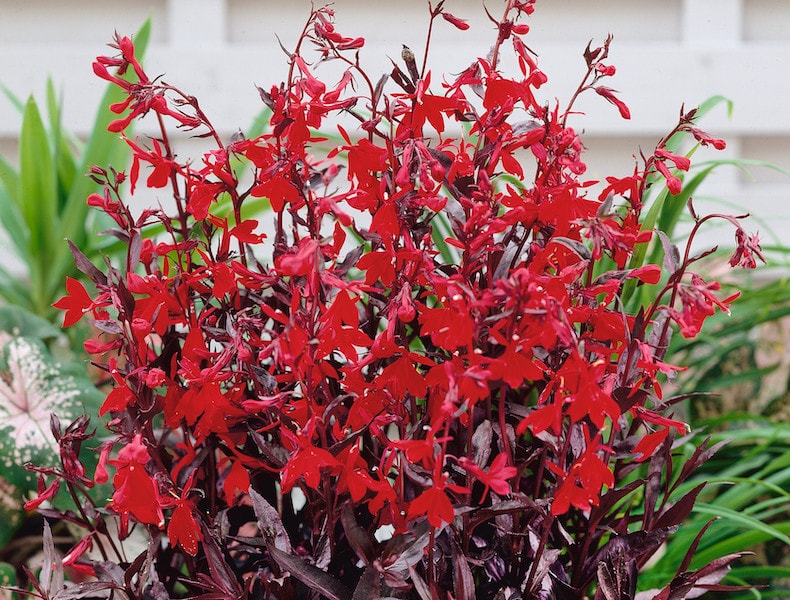
Red lobelia aquatic flower

'Queen Victoria' is an exotic looking perennial to surround ponds and streams
Image: Lobelia cardinalis 'Queen Victoria' from Thompson & Morgan

'Right plant, right place' is often quoted by gardeners, but it's especially important when it comes to pond plants. Some like moist soil, while others need to be fully submerged. Here are some guidelines when it comes to choosing the best aquatic plants for your garden pond:

  • Find the right pond plant for each 'zone': Different aquatic plants require different depths of water, so it's important to do a little research and choose plants that suit the conditions that your pond offers.
  • Opt for wildlife-friendly pond plants: Adding a pond to your garden is one of the most important ways to support wildlife and create a thriving ecosystem. From tiny insects and amphibians to birds and larger mammals, so many creatures benefit from an accessible water supply. Native pond plants make an excellent wildlife-friendly choice. Try Water Milfoil as an oxygenator, Yellow Flag as a native marginal for pollinators, and Frogbit as a floating aquatic to provide shade.
  • Add pond plants for water clarity and algae control: Some aquatics are particularly good at keeping your pond healthy by absorbing excess nutrients. This helps to keep the water clear. Be sure to include some submerged oxygenators along with floating plants that shade the pond's surface. Limiting sunlight helps to reduce algae blooms.
  • Consider pond plants that provide all-year-round interest: Water features bring an extra dimension to any garden, allowing you to grow a wide variety of unusual and breathtaking plants. Check the final mature size of everything you introduce to your pond, and contain any plants that have a tendency to spread. Remember to incorporate evergreen varieties to keep your pond looking fantastic all year round.

What are the five 5 different pond zones?

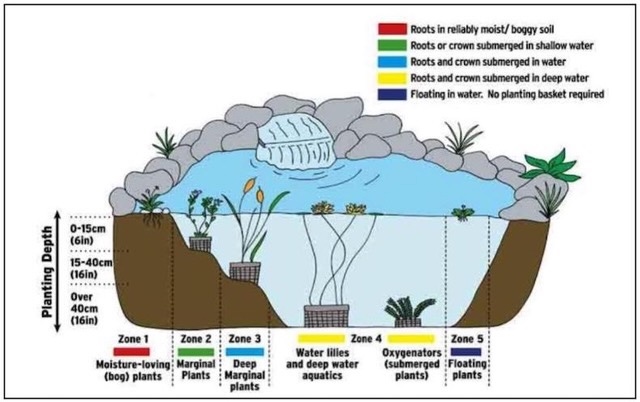
pond planting zones

To make the most of your pond, you'll need to check the depth of the water in different places and choose plants that thrive in each position. If you're creating a new pond from scratch, be sure to shelve the sides so that you can plant an interesting variety of beautiful aquatics.

  • Zone 1: Moisture-loving bog plants: This diverse set of plants bridges the gap between water and dry land. Although most of these species are not actually aquatic plants, they will enjoy reliably moist or even boggy soil around the edge of ponds, lakes and watercourses. These plants should not be submerged in water as they're likely to rot in such circumstances.
  • Zones 2 and 3: Marginal pond plants: These plants thrive in the shallow waters at the inside edge of your pond and are often referred to as emergent plants. Some prefer the shallowest shelves (zone 2) while others can cope with slightly deeper water (zone 3). Check the depths of your pond margins to help you choose the right plants.
  • Zone 4: Deep water pond plants and oxygenating pond plants: Deep water aquatics flourish in the deeper recesses of the pond. With the crown fully submerged beneath the water, many (such as Water Lilies) produce foliage on long stems that float at the water's surface. Submerged oxygenators, on the other hand, are rarely seen but are some of the most important. Submerged oxygenating plants create a healthy pond in which fish and wildlife can flourish. Many submerged aquatic plants are sold as bunches of stems that can be weighted or planted into pots to anchor them at the bottom of the pods. Aim for 4 to 5 bunches per square metre of water surface.
  • Zone 5: Floating pond plants: Floating pond plants create cover for wildlife and shade across the water's surface. They don't require planting - simply place them on the water's surface and leave them to float around.

How and when to plant marginal pond plants

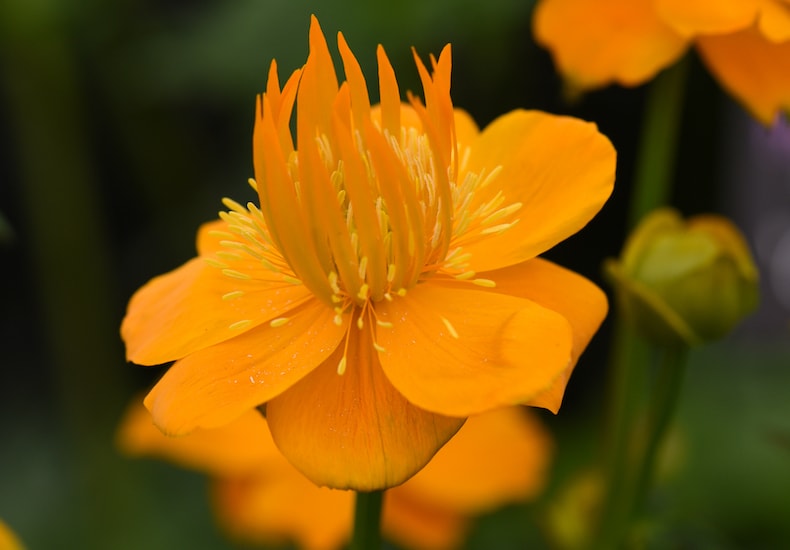
trollius chinensis 'golden petal''

Trollius chinensis thrives in bog gardens or damp borders (RHS AGM variety)
Image: Trollius chinensis 'Golden Queen' from Thompson & Morgan

Here are some helpful tips for planting marginal aquatics:

  • Plant between spring and early summer when the water is warming up and the plants are springing into life.
  • Use a heavy loam compost which won't float to the surface of the pond. You can buy specialist aquatic compost, or use heavy garden soil provided that it's free from fertilisers and herbicides.
  • Use special aquatic containers with mesh sides that allow free movement of water and oxygen. Most gardeners prefer to plant into containers as this controls the spread of the plants and makes maintenance easier. In larger ponds you can plant directly into the silt at the bottom of the pond.
  • Add a deep layer of stones at the bottom of the container for extra stability and to help anchor the plant in place. This is particularly useful when planting tall pond plants or when planting into flowing water.
  • Apply a thin layer of grit or fine stone across the top of the container to prevent the soil floating out when you submerge it. Saturating the soil with a hosepipe prior to planting will also help to keep the soil in place.

How to plant deep water pond plants

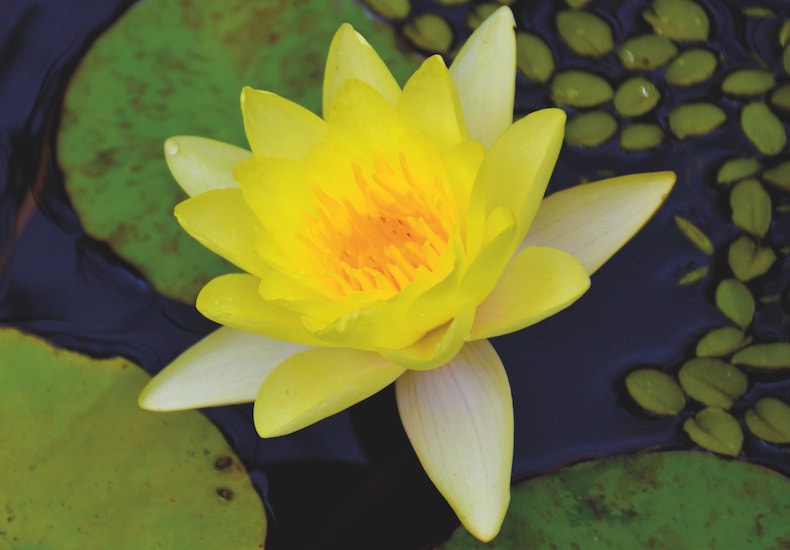
Yellow water lily

This yellow water lily is a deep pond plant with exotic cup-shaped blooms and glossy green pads
Image: Water Lily (Yellow) from Thompson & Morgan

This yellow water lily is a deep pond plant with exotic cup-shaped blooms and glossy green pads
Image: Water Lily (Yellow) from Thompson & Morgan

Here's how to plant deep water aquatics:

  • Water lilies and other such plants need time to adjust to deep water. When newly planted they will need raising on bricks wrapped in some spare pond liner, or a submerged temporary platform within the pond. Gradually lower them in stages until they reach their final positions - at each stage the foliage must have grown to reach the surface before they are submerged to the next depth.
  • Unless you have very tall wellies or don't mind a dip then it can be hard to position deep water aquatics in the pond. Find a friend to help you, and thread some twine through the mesh sides of the container. Take one end of the twine each and gradually lower the plant into position, before gently tugging the twine from the container.

How to care for your pond plants

Yellow water lily

Also known as Elephant's Ear, this Colocasia rubra has dark and dramatic foliage
Image: Colocasia rubra 'Black Magic'(Marginal Aquatic) from T&M

Most pond plants, including marginals and deep-water aquatics, benefit from being grown in planting baskets filled with specialist aquatic compost. This helps to contain vigorous growers and prevents soil from clouding the water.

If your plants fail to thrive, check that they are growing at a suitable depth - being too deep or too shallow will hinder growth. Also, keep an eye out for the following pests and diseases:

  • Water lily aphids which cause yellowing and curling of leaves. Remove with a hose or submerge for a day or two.
  • Water lily beetles, whose larvae and adults feed on leaves, leaving holes and scars. Manually remove.
  • Brown China Mark Moth caterpillars which damage leaves by cutting out oval segments. Manually remove.
  • Crown Rot (a fungal infection) which manifests as yellowing, wilting leaves, and a mushy, foul-smelling crown. Remove plants promptly to prevent spread.
  • Leaf Spot Disease (often fungal) which appears as brown, red, or black spots on leaves. Trim off affected foliage.

How and when to prune pond plants

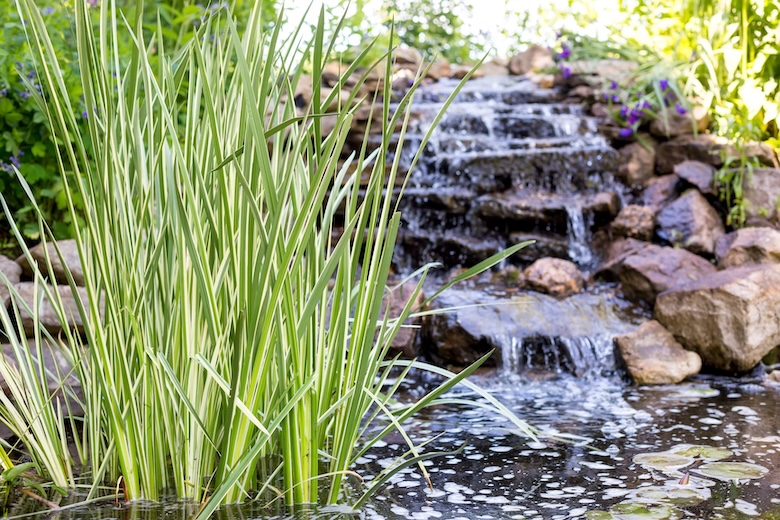
acorus calamus variegata

This variegated grass is an excellent architectural plant for ponds
Image: Acorus calamus 'Variegata'(Marginal Aquatic) from T&M

Regular pruning is essential to prevent overcrowding and maintain plant health. In spring and early summer, remove any dead or damaged leaves and thin out excessive growth.

  • Prune oxygenating plants back to about one-third of their length, ideally to at least 15cm below the water surface. This encourages new growth rather than just flower production.
  • Marginal plants should be cut back to about 20cm above the ground in autumn after they've flowered and released their seeds.
  • If you have water lilies, remove any browning leaves throughout the growing season and divide the plants every three to four years (in spring) to maintain vigour.

In late autumn, most native pond plants will naturally die back. It's crucial to remove this decaying plant material to prevent it from rotting in the pond, which can deplete oxygen levels and contribute to a build-up of sludge. Place a net over your pond in autumn to catch falling leaves from nearby trees and reduce the organic load in the water.

  • For deciduous marginal plants, cut back browning foliage to about 4cm above the water surface, ensuring not to cut below the water level.
  • Hardy water lilies and other deep-water plants should have their foliage trimmed back and their pots lowered to the deepest part of the pond, or at least 20cm below the expected ice level, to protect their crowns and rhizomes from freezing.

How to grow pond plants without a pond

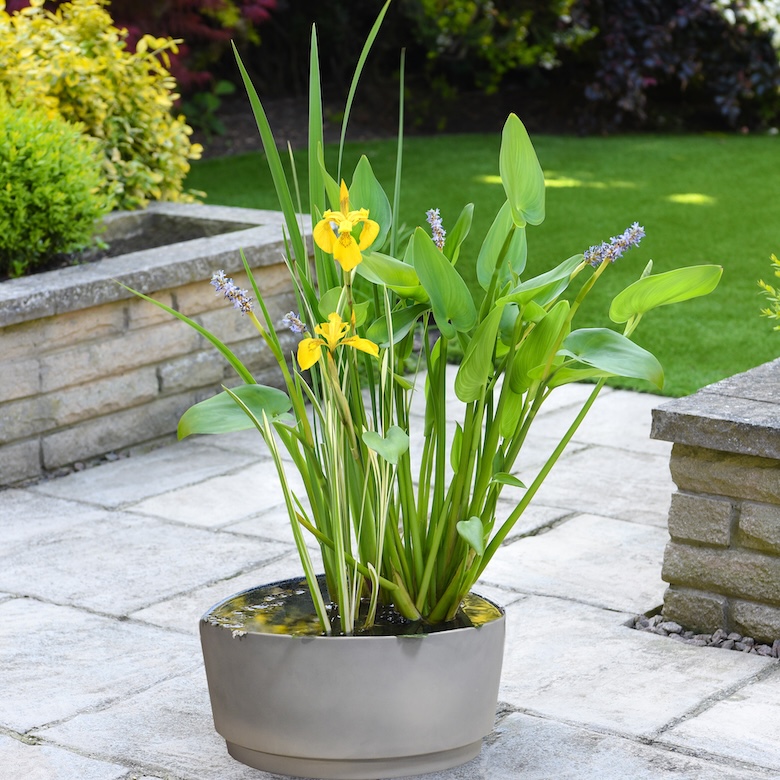
acorus calamus variegata

Our Patio Pond Kit comes with three beautiful aquatic plants
Image: Patio Pond Plant Kit from T&M

If you don't have space for a permanent pond, or live in a rental property, you can still enjoy growing aquatic plants using a patio pond kit. Containing an ornamental pot and a carefully curated selection of aquatic plants, these kits are a clever way to create a tranquil water feature in a small garden or balcony.

For more expert tips on growing aquatics, see our pond plants masterclass which is packed with practical advice from experienced gardeners.

Other helpful resources:

Sue Sanderson T&M horticulturalist

Written by: Sue Sanderson

Plants and gardens have always been a big part of my life. I can remember helping my Dad to prick out seedlings, even before I could see over the top of the potting bench. As an adult, I trained at Writtle College where I received my degree, BSc. (Hons) Horticulture. After working in a specialist plantsman's nursery, and later, as a consulting arboriculturalist, I joined Thompson & Morgan in 2008. Initially looking after the grounds and coordinating the plant trials, I now support the web team offering horticultural advice online.

Sign Up For Exclusive Special Offers

Get exclusive discounts, new product notifications and hints, tips and more!

JOIN NOW
RedEye
X

Thompson & Morgan Gardening App

Our full range of products are now available right at your fingertips. Browse everything from flowers and house plants through to fruit and vegetables at ease on your mobile device.

To download our app simply scan the QR code below:

QR code to download the thompson & Morgan App

Sign up for exclusive offers!